Key Features & Highlights
• Medieval origins: The course evolved from common links ground, giving its layout a historical depth that cannot be attributed to one original designer.
• Strategic design heritage: Its broad, open terrain is closely associated with the Strategic School, where position and angle shape the next shot.
• Swilcan crossing: The Golfer’s Bridge spans the Swilcan Burn, combining a practical course feature with one of golf’s most familiar landmarks.
• Old Tom Morris connection: Morris’s stewardship from 1864 brought major design influence within a course already shaped by centuries of use.
• Public access: Managed by the St Andrews Links Trust, The Old Course remains a public course rather than a private members-only preserve.
About The Old Course at St Andrews Links
The Old Course at St Andrews Links is an 18-hole public coastal links in Fife, shaped gradually from medieval common ground rather than drawn by a single modern architect. Its open terrain, Swilcan Burn crossing and historic march stones make the course a direct expression of St Andrews’ long relationship with the game.
Course Overview
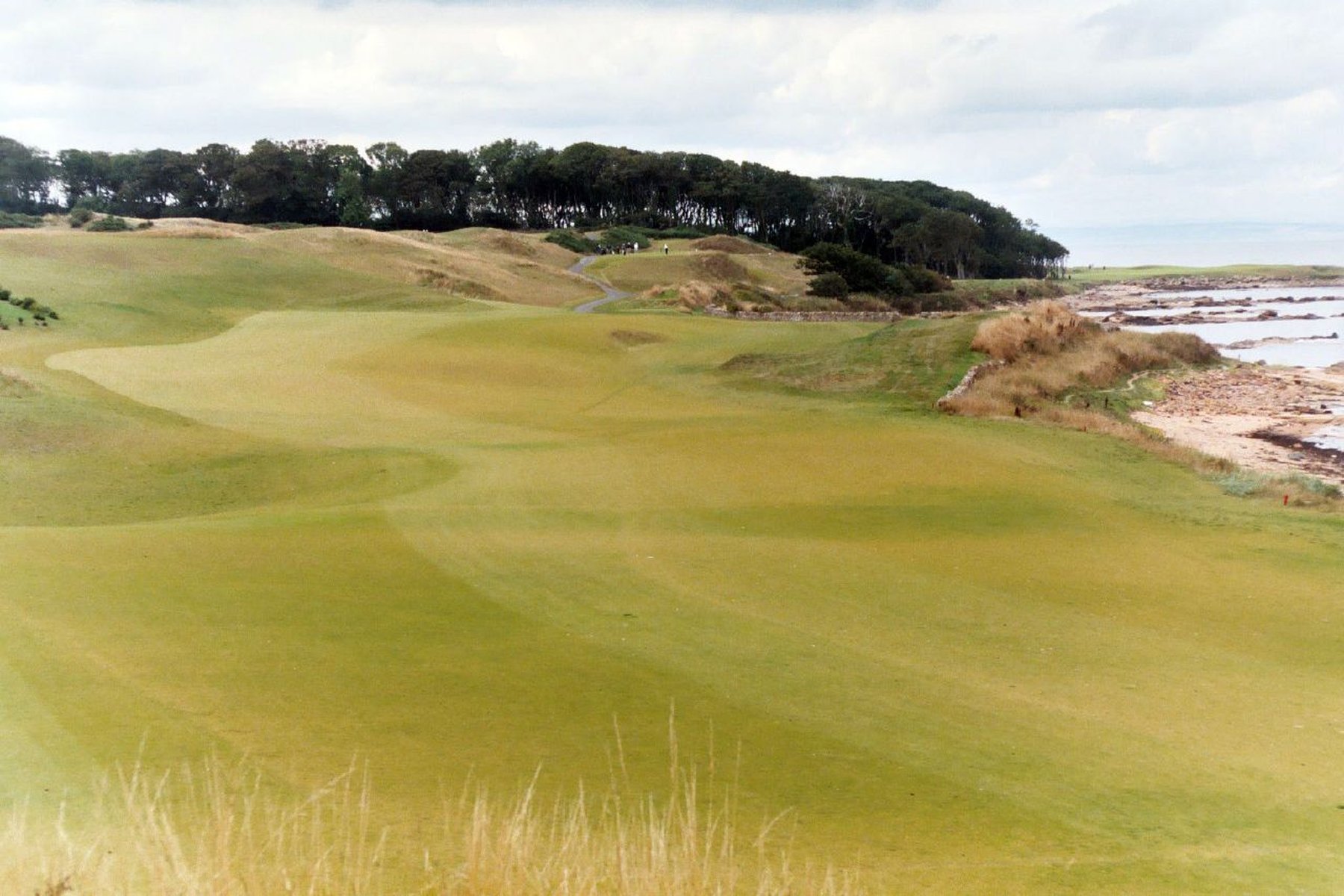
The Old Course at St Andrews Links occupies coastal common ground in St Andrews, Fife, where golf developed through use and adaptation rather than a single act of design. This is an 18-hole public links course managed by the St Andrews Links Trust, its broad, open setting marked by the Swilcan Burn, the stone Golfer’s Bridge and historic march stones that record the landscape’s older boundaries.
A course formed by use
The Old Course matters because its shape is historical as well as physical. Historic Environment Scotland identifies the site as a designed landscape, while the course itself evolved from medieval common links ground. That origin distinguishes it from the later model of a golf course created to a fixed plan by a named architect.
Its architectural authorship is therefore collective and cumulative. Generations of golfers, greenkeepers and custodians altered the ground over time, responding to the terrain rather than imposing a wholly separate pattern upon it. The result is frequently associated with the Strategic School of golf-course design: a style in which options, angles and positioning carry as much consequence as sheer length.
Old Tom Morris has a defined place within that longer story. From 1864, his stewardship and design work brought transformational change to the course, yet did not erase its older character. The Old Course remains a landscape whose principal design language comes from the natural links ground and the centuries of play it absorbed.
The Old Course hole-by-hole: reading the ground
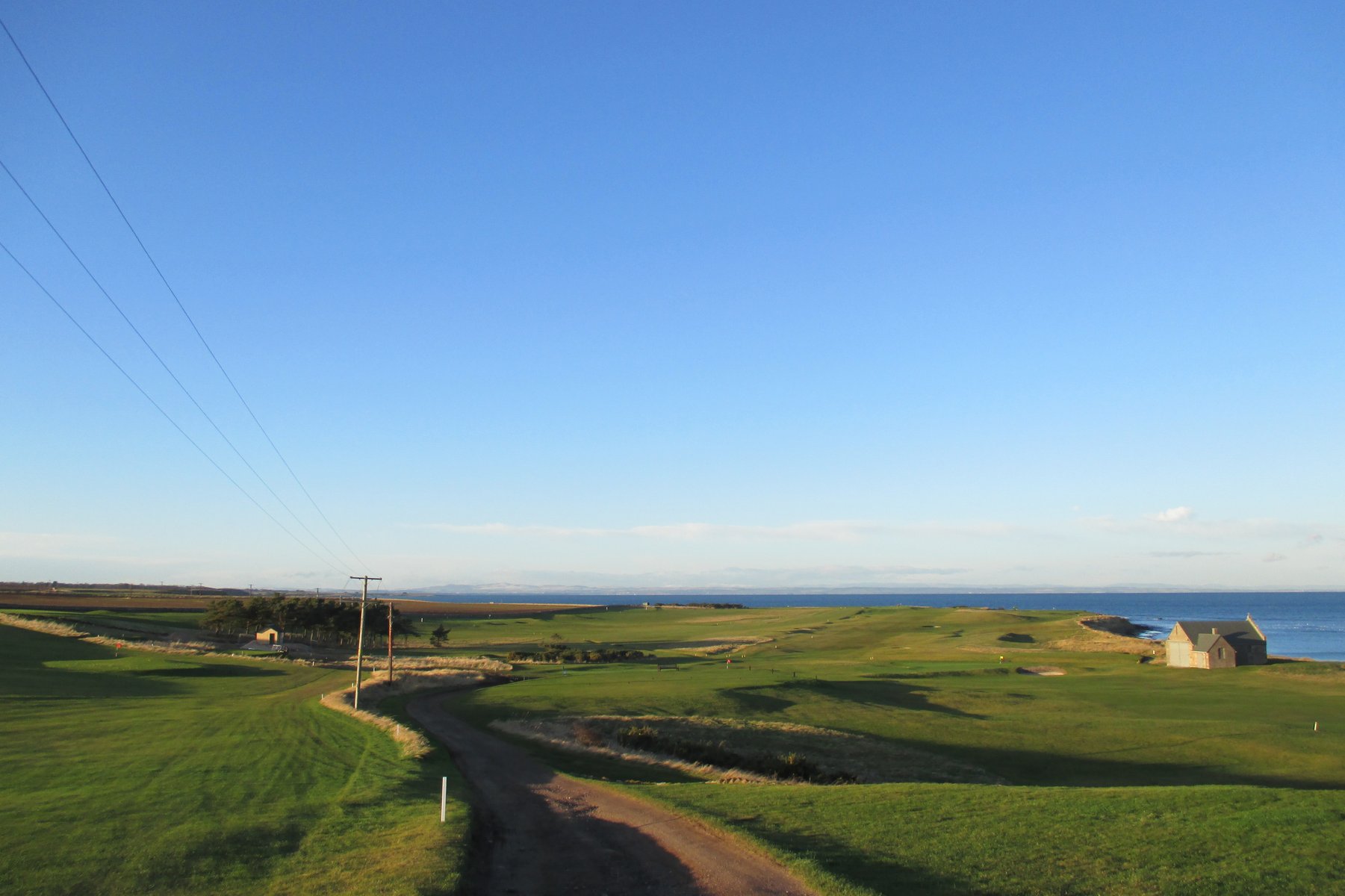
The Old Course lies on open coastal-flat landscape rather than a sequence of enclosed corridors. Players encounter a course that reveals much of its ground at once, where separation between holes is less emphatic than at many modern layouts and where the larger pattern of the links remains visible.
That openness makes the route a matter of observation. The ground does not depend on ornamental planting or manufactured theatre to announce its character; its interest lies in the relationship between playing lines, natural contours and the space around them. In strategic terms, the course asks golfers to consider where a ball is placed, not simply how far it travels.
The Swilcan Burn provides the clearest named interruption within this broad terrain. Its crossing by the Golfer’s Bridge has become one of the most recognisable images in the game, but it is also a practical piece of the course’s geography: water and passage meet at a point shaped by the old links rather than by a later landscape scheme.
Historic march stones offer another, quieter detail. They are not golf hazards in the conventional sense, but they place the round within a working historical landscape. Their presence reminds visitors that this was shared ground before it became an internationally recognised golfing address.
Coastal ground and the conditions that define it
As a coastal links, The Old Course is exposed to the elements in a way that belongs to its identity. The open setting offers few visual barriers between the golf course and the wider coastal plain, so wind has the potential to alter the day’s choices and the appearance of shots. That is a feature of the site, not an accessory to it.
The course’s enduring design reputation rests partly on this changeability. A strategic links course does not prescribe one solution in the manner of a rigid examination paper; it presents ground, space and hazards whose significance may shift with weather and playing line. The Old Course’s long evolution gives that principle unusual weight, because its design was refined across many eras rather than frozen at a single moment.
This is also a public course, an important fact in a town where golf history can seem remote from the everyday visitor. Access is managed within a formal system, but the course’s origins in common land remain central to the story told by the landscape itself.
Heritage beyond a single designer
The Old Course has hosted The Open, linking St Andrews directly to the championship history of golf. Yet the course’s significance cannot be reduced to tournament staging. Its stronger distinction is that it demonstrates how golf architecture can emerge from the interaction of people, terrain and long use.
That makes careful language important. To describe The Old Course as the work of one architect would flatten a much more interesting truth. Old Tom Morris was influential, but the course is best understood as an inherited work, adjusted and maintained across centuries on land that already carried communal meaning.
Planning a round at St Andrews
Visitors should treat The Old Course as a round requiring advance practical preparation. Current booking arrangements, available tee times, playing conditions, access procedures and any visitor requirements are not included in the supplied information and should be confirmed directly with St Andrews Links before travel.
The same applies to green fees, equipment services, transport, dining and clubhouse arrangements. These details are important to a Scottish golf itinerary, but they vary and should not be assumed from the course’s reputation. The official St Andrews Links information is the appropriate starting point for current operational guidance.
For travellers who value the history of golf-course design as much as a score, The Old Course offers something precise: a public coastal links whose character was formed over time, not manufactured as a historical imitation. Plan with current information in hand, then allow the ground, the burn, the bridge and the old boundary markers to supply the context no brochure can manufacture.
History & Heritage
From common ground to a managed public course
The Old Course developed on medieval common links ground in St Andrews rather than beginning with a single commissioned plan. Historic Environment Scotland records the wider site as a designed landscape, preserving evidence of its layered use in the form of historic march stones and the open ground that surrounds the course.
Old Tom Morris began a major period of stewardship and design work in 1864. His contribution was transformative, but it formed one chapter in a much longer evolution. Today, the St Andrews Links Trust manages The Old Course as a public 18-hole coastal links, retaining a relationship between golf and shared landscape that reaches back beyond modern course architecture.
Insider Tips & Visitor Information
1. Confirm Current Arrangements: Tee-time procedures, visitor requirements, fees and seasonal availability were not supplied in the course information: Check the latest guidance issued by St Andrews Links before committing accommodation, transport or a wider Fife golf itinerary.
2. Use The Scorecard: Current pars, distances and tee positions should be verified against the latest official scorecard: Do not rely on older guides, as they may not reflect current presentation or available playing options.
3. Allow For Exposure: The course is identified as open coastal links ground: Pack clothing suitable for changing Scottish coastal weather, while checking the current forecast close to the date of play.
4. Read The Landscape: Look beyond named landmarks such as the Swilcan Burn and Golfer’s Bridge: The wider open ground and surviving march stones provide useful context for understanding the course’s common-land origins.
5. Build In Context: Leave time to explore St Andrews itself around the round: The course sits in the town identified with its history, and its architectural story is clearer when considered alongside the surrounding links landscape.