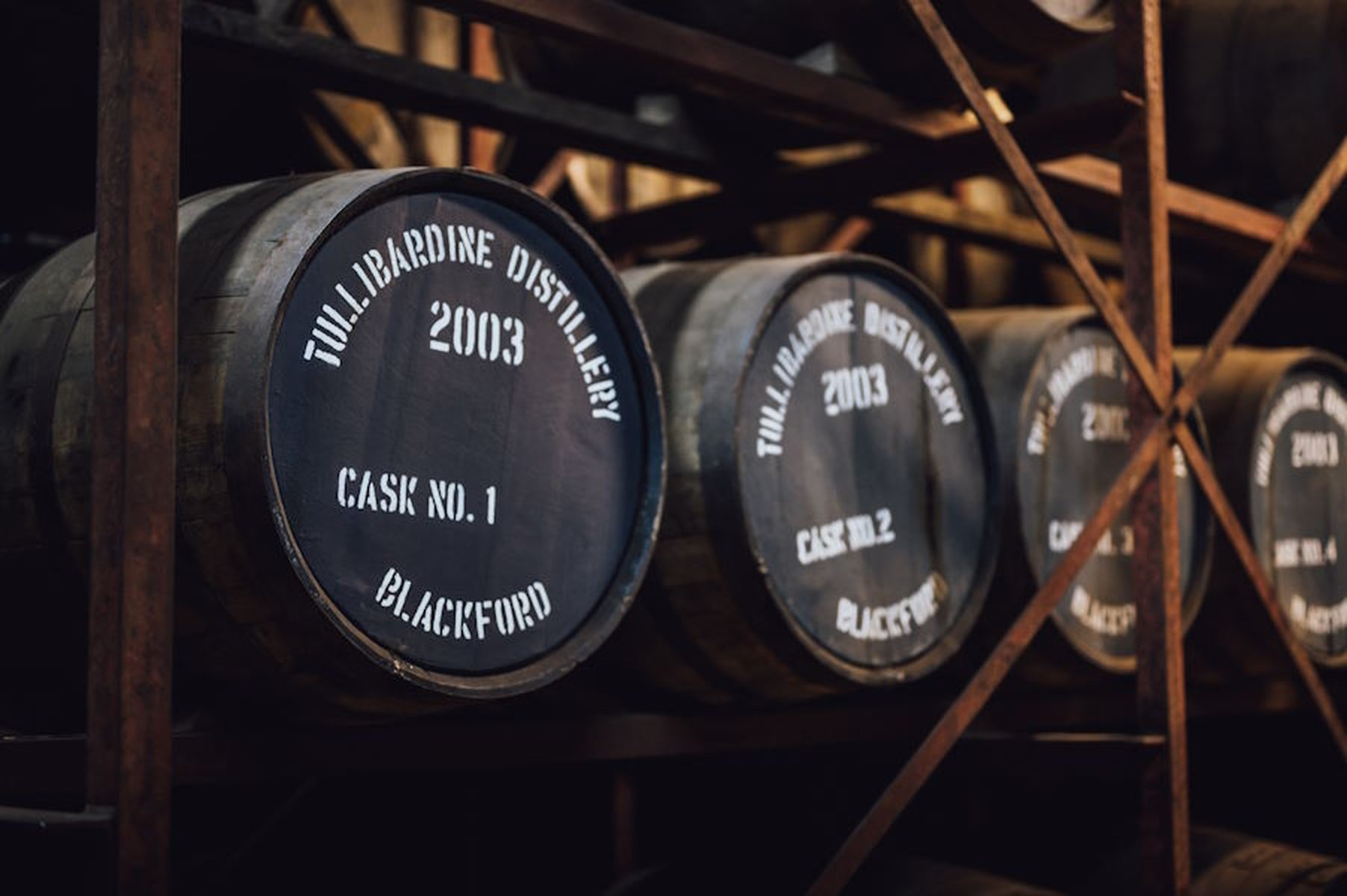

Scotland’s whisky distilleries are part of working landscapes shaped by barley, water, peat, soil, climate, heritage and production knowledge.
As of September 2026, Scotland had 155 operating Scotch Whisky distilleries, supporting more than 41,000 people across the country. For anyone considering an extended stay, a second home or simply a deeper connection with Scotland, the useful question is not only which distillery to visit. It is which whisky region suits the pace, landscape and interests of the trip.
Scotland’s malt whisky regions are classified as Speyside, the Highlands, the Lowlands, Islay and Campbeltown. The supplied regional evidence is strongest for Speyside, where regional tourism sources identify more than half of Scotland’s distilleries, the River Spey and its tributaries, barley-growing land and the Speyside Way.
For golfers, the practical details matter. Tee times, driving distances, designated drivers and plans for non-drinking companions should shape the distillery schedule from the outset.
Whisky distilleries in Scotland: an industry rooted in place
A national craft with global economic weight
Scotch whisky remains one of Scotland’s defining exports and an important part of its public identity. In 2025, Scotch Whisky exports were valued at £5.36 billion, representing 72% of Scottish food and drink exports and 23% of Scotland’s international goods exports.
Those figures need context. Export value fell by 1.8% and volume by 4.3% during 2025, amid weaker demand and the effects of US tariffs; those tariffs were reported as removed in April 2026.
The whisky industry matters well beyond warehouse doors and still houses. Its economic and cultural importance is reflected in employment, exports, production heritage and visitor activity.
The Scotch Whisky Association provides the cited definitions and production rules. The supplied evidence states that Scotch Whisky must be distilled and matured in Scotland for at least three years in oak casks and made from water, cereals and yeast.
The ingredients of a Scottish sense of place
Whisky’s relationship with place rests on more than a regional label. Scottish barley, water sources, peat, soil, local climate, production choices and inherited knowledge all contribute to the character of individual distilleries.
It is tempting to treat whisky regions as fixed flavour maps. They are more useful as guides to landscape, travel patterns and historical production traditions. Individual distilleries can differ sharply, even when they sit within the same broad region.
Tourism gives this living industry a wider cultural role. Scotch Whisky distilleries recorded 2.7 million visits in 2024, making distillery visitor centres collectively one of Scotland’s major visitor attractions.
For longer stays, that matters. Whisky country is not a separate visitor zone: it is connected to landscapes, heritage, agriculture, tourism and recreation.
Scotland’s whisky regions explained: choosing a landscape and rhythm
Speyside: concentration, river valleys and connected exploration
Quick answer: Speyside is the strongest starting point for travellers who want several distillery choices within one wider area, alongside river-valley scenery, walking and a practical base for a multi-day trip.
Regional tourism sources describe Speyside as home to more than half of Scotland’s distilleries. Its identity is closely tied to the River Spey and its tributaries, barley-growing land, the Speyside Way and a concentration of well-known producers.
That density changes the rhythm of a stay. A visitor can choose one meaningful distillery experience, build in a walk or lunch, and still avoid turning the day into a long cross-country drive. For golfers, this can make Speyside easier to combine with a relaxed programme, provided transport is planned carefully.
The Macallan Estate and Distillery illustrates the visitor-facing side of Speyside’s established whisky economy. Current tour formats, access arrangements, opening hours and prices should be checked directly with the distillery before travel.
Highlands: breadth, variety and longer journeys
The Highlands cover a broad and varied geographical area. This is the region for travellers who value changing scenery and are prepared to assess the distances between distilleries, golf courses and accommodation before booking.
A Highland itinerary benefits from restraint. Choose one base, identify a small number of experiences within realistic driving range, and leave room for outdoor leisure, local towns and weather changes.
For an extended stay, the reward is range rather than concentration. The trade-off is that a rushed itinerary can become dominated by the road.
Lowlands: an accessible starting point
The Lowlands can suit travellers arriving through Edinburgh, Glasgow or Scotland’s central belt. Its appeal lies in the opportunity to combine whisky with wider cultural and rural outings.
This can be particularly useful for mixed groups or shorter breaks. A more accessible base may reduce pressure on the designated driver and leave time for activities beyond tasting rooms.
Specific rail connections, public transport options and tour availability vary by location. Check current routes and official distillery information before building a car-free plan.
Islay and Campbeltown: coastal character and commitment
Islay and Campbeltown are among the five geographical categories identified in the Scotch Whisky Association’s regional map. Reaching any destination should be treated as part of the itinerary, with current travel arrangements checked before departure.
Both destinations reward careful planning. Travel time, transport availability and the limited usefulness of driving after tastings deserve attention. Their relative remoteness can create immersion, but it also makes spontaneous changes less straightforward.
Quick decision guide: which region fits your plans?
| Region | Landscape character | Best trip length | Golf-and-whisky fit | Transport consideration | Suits |
|---|---|---|---|---|---|
| Speyside | River valleys and farmland | 3–5 days | Strong all-round option | Plan a driver after tastings | Distillery-focused explorers |
| Highlands | Wide geography and changing scenery | 4+ days | Best with one regional base | Longer drives are common | Scenic touring golfers |
| Lowlands | Central-belt access and varied outings | 2–4 days | Useful for mixed programmes | Check route-specific public transport | City-and-country visitors |
| Islay | Coastal island setting | 4+ days | Destination-led rather than convenient | Ferry or flight planning required | Peat enthusiasts |
| Campbeltown | Peninsula setting and focused identity | 3–4 days | Works in a slower itinerary | Allow realistic road time | Travellers seeking a compact focus |
Golf, whisky and the practical shape of a Scottish day
Which whisky region in Scotland is best for your golf trip?
Quick answer: Speyside is often the most practical all-round choice when whisky is central to the trip, thanks to its distillery concentration and connected visitor landscape. But the best region may be determined by the golf course or golf area that anchors the holiday.
Start with confirmed tee times. Then add one distillery visit, rather than trying to fit a tasting-heavy schedule around a full round of golf. A round can occupy most of the day once travel, practice, food and changing conditions are included.
Use six questions to test an itinerary: Where is the golf? How many nights are available? How much driving is realistic? Which whisky styles interest the group? Who will not be drinking? Is there a designated driver or booked transport?
Three ways to pace a golf-and-whisky stay
A three-day break works best from one base. Plan one or two distillery experiences, one principal golf commitment and no more than one major travel day.
A four-day stay allows two contrasting distillery visits without overloading the schedule. Keep one day flexible for a walk, local food, heritage activity or weather contingency.
A five-day trip supports a clearer regional approach. Speyside can combine golf, the Speyside Way and distillery visits from one area, while an island or peninsula plan needs buffer time for travel.
Responsible travel belongs in the itinerary
Tastings and driving do not mix. Arrange a designated driver, confirmed local transport, a guided trip or a car-free day when alcohol forms part of the plan.
Timetables and tour availability can change. Book golf and distillery experiences separately, but coordinate them before departure and allow proper time for meals, travel and rest.
Beyond the dram: community, hospitality and daily life
Food and hospitality in whisky country
Distillery visits sit within a wider landscape of heritage, tourism and recreation. A good whisky day should leave space for those things, rather than reducing a region to a sequence of tastings.
For readers considering a longer stay, visitor appeal is only one measure. Everyday shopping, healthcare, schools, broadband, transport and year-round services vary widely between towns, villages and rural districts, and should be assessed independently.
This is especially important in remote areas. A beautiful journey to a distillery does not automatically indicate that daily errands or winter travel will be simple.
A better approach for mixed groups
Non-drinking companions should not be treated as spectators. Build equal-status activities into the day, while confirming what is available in the specific locality.
A section of the Speyside Way, a heritage visit, a scenic drive, a relaxed lunch or time in a local town can provide the main structure, with a distillery tour as one part of it.
Accessibility arrangements, family suitability and non-alcoholic options should be confirmed with each venue in advance.
Seasonal rhythm and rural trade-offs
Scotland’s whisky regions change with daylight, weather, road conditions and visitor demand. Quieter periods can suit travellers looking for a slower atmosphere, while busier months may place greater pressure on accommodation and advance reservations.
Island and rural journeys require particular flexibility. Travel reliability, seasonal opening patterns and transport alternatives can affect an otherwise straightforward plan.
For some, that is part of the appeal: a stay shaped by landscape and season rather than constant convenience. For others, a more accessible base may provide a more comfortable balance.
How to plan visits to whisky distilleries in Scotland
Choose experiences, not simply famous names
A useful shortlist considers heritage, production story, landscape setting, visitor experience, accessibility and golf-itinerary practicality. It should also consider how well the visit suits beginners, established whisky drinkers and non-drinking companions.
One or two well-chosen distillery visits will often provide more value than a hurried list of famous names. Some groups will prefer an architectural setting or premium tasting; others will be more interested in historic production methods or a simple introductory tour.
Booking and logistics checklist
Book ahead where possible, especially for small-group tours, specialist tastings and peak-season dates. Before committing, confirm opening days, tour duration, age restrictions, accessibility arrangements, photography rules, parking, cancellation terms and non-drinker options directly with the distillery.
Do not rely on broad regional travel descriptions for journey times. Check current mapping, road conditions and transport sources close to departure.
Travelling without a car is possible in some areas, but the itinerary should be built around confirmed public transport, guided travel or accommodation within practical reach of activities. Opening hours, prices, transport schedules and availability all change, so official distillery pages remain the final reference point.
Finding the Scottish whisky region that feels like yours
Scotland’s distilleries make most sense as part of regional landscapes shaped by production, heritage, agriculture, tourism, recreation and local knowledge.
Choose among the five recognised geographical categories according to the pace of stay you want. Speyside offers the strongest documented combination of distillery concentration, river valleys, barley-growing land and the Speyside Way. For the Highlands, Lowlands, Islay and Campbeltown, confirm current transport, golf, visitor and lifestyle details before committing to a longer itinerary. Plan golf, tastings and non-drinking activities as complementary parts of the same Scottish experience.